

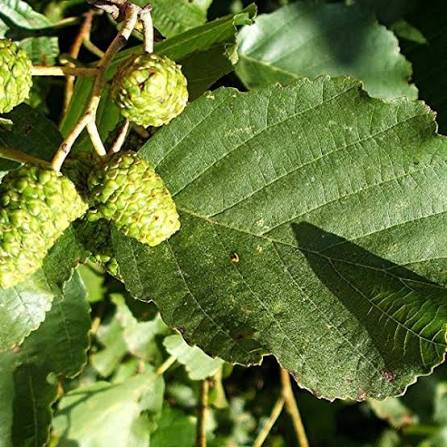

Common Alder Tree | Alnus glutinosa |
€9.00
15 in stock
15 in stock
Alnus glutinosa – Common Alder | Native Irish Tree
Alnus glutinosa, the Common Alder, is one of the most ecologically important and versatile native trees in Ireland. A familiar sight along riverbanks, streams, and boggy ground throughout the country, it is a tree perfectly adapted to the wet, heavy soils that challenge most other species. Fast-growing, tough, and extraordinarily valuable to wildlife, Alder is an essential choice for any naturalistic, native, or wetland planting scheme.
What makes Alder truly remarkable is its ability to fix nitrogen from the atmosphere through a symbiotic relationship with bacteria in its root nodules — actively improving the soil around it as it grows. This makes it not just a tree, but a genuine asset to the land it grows on, benefiting neighbouring plants and improving soil health over time.
Product Features
- Native Irish tree — perfectly adapted to Irish soils and climate
- Thrives in wet and waterlogged ground — ideal for problem sites
- Nitrogen-fixing roots — improves soil health naturally
- Outstanding wildlife value — supports over 140 species of insects
- Fast-growing — establishes quickly and puts on strong annual growth
- Supplied in a 5L pot — well-rooted and ready to plant
Why Choose Common Alder?
If you have a wet corner, a boggy field boundary, a streamside, or a low-lying area that sits waterlogged through winter, Alder is almost certainly the right tree. While other species sulk or fail in waterlogged conditions, Alder positively thrives — its roots are specially adapted to grow in saturated, oxygen-poor soils. It stabilises riverbanks and stream margins, prevents erosion, and creates dense, productive habitat for a huge range of wildlife. For farmers, landowners, and conservation-minded gardeners, there are few better native tree investments.
Growing Information
Common Alder is at its best in moist to wet soils — it will tolerate periodic flooding and heavy clay ground that would kill most trees. It does equally well in full sun or partial shade. While it is most associated with waterside planting, it will also perform well in reasonably moist garden soils away from water. It is completely hardy throughout Ireland and is naturally resistant to most pests and diseases.
Planting and Care
Plant in autumn or spring in moist or wet ground with no soil improvement necessary — Alder is well adapted to poor, waterlogged conditions and will improve the soil itself over time. Water well during the first season if planting away from a water source. Little ongoing maintenance is required. Alder can be coppiced or pollarded if size needs to be managed, and responds vigorously to hard cutting.
Design and Planting Ideas
- Streamside and riverbank planting for erosion control
- Wetland and bog garden schemes
- Native woodland creation and hedgerow planting
- Field boundaries on heavy, wet land
- Biodiversity and conservation planting projects
- Screening and shelter on wet or exposed sites
Benefits for Irish Gardens and Land
Few trees are as well matched to the Irish landscape as the Common Alder. Ireland’s high rainfall, heavy soils, and abundance of streams and low-lying ground make it ideal Alder territory. Its catkins provide an early pollen source for bees in late winter, its seeds feed siskins, redpolls, and other finches through autumn and winter, and its branches and root systems create vital habitat for invertebrates, otters, and kingfishers. For any landowner looking to improve biodiversity, Alder should be near the top of the list.
Perfect For
- Wet, waterlogged, or poorly drained ground
- Riverbanks, stream margins, and pond edges
- Native woodland and hedgerow planting
- Biodiversity and agri-environment schemes
- Farmers and landowners with heavy or boggy land
- Anyone wanting a fast-growing, low-maintenance native tree
All Alnus glutinosa trees from Etna Plants are grown right here in Co. Limerick, ensuring they are fully acclimatised to Irish growing conditions and ready to establish strongly from the moment they go in the ground. Available in a 5L pot with a well-developed root system.
.specs-grid { display: grid; grid-template-columns: repeat(auto-fit, minmax(180px, 1fr)); gap: 10px; padding: 1.5rem 0; }
.spec-card { background: #ffffff; border: 1px solid #e0e0e0; border-radius: 12px; padding: 14px 16px; display: flex; align-items: flex-start; gap: 12px; }
.spec-icon { font-size: 22px; color: #3B6D11; flex-shrink: 0; margin-top: 2px; }
.spec-label { font-size: 12px; color: #777777; margin: 0 0 3px; }
.spec-value { font-size: 14px; font-weight: 500; color: #222222; margin: 0; }
.grown-card { background: #EAF3DE; border: 1px solid #97C459; border-radius: 12px; padding: 14px 16px; display: flex; align-items: center; gap: 12px; grid-column: 1 / -1; }
.grown-icon { font-size: 22px; color: #3B6D11; }
.grown-text { font-size: 14px; font-weight: 600; color: #3B6D11; margin: 0; }
Height at Maturity
Up to 20m
Spread
Up to 10m
Foliage
Deciduous
Soil
Moist to waterlogged
Position
Full sun to partial shade
Catkins
Late winter–early spring
Hardiness
Fully hardy (H7)
Supplied As
5L pot
🌿 Grown in Ireland — Etna Plants, Co. Limerick
 Actual Height 150-170cm |
 Growth rate 60-70cm per year |
 Planting Distance Stand Alone |
|
Height 150-170cm |
|
Growth Rate 60-70cm per year |
 |
Planting Distance Stand Alone |


